

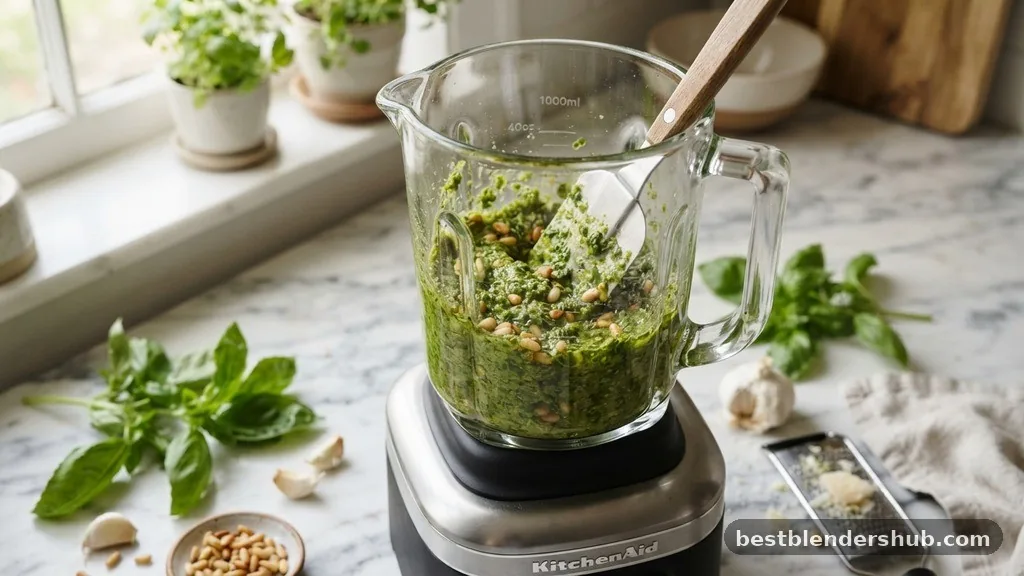
Many home cooks wonder if they can make pesto in a blender without ruining the texture of their favorite Italian sauce. While traditionalists swear by a mortar and pestle, modern kitchens often rely on electric appliances to get dinner on the table quickly. You absolutely can use a blender for this task, provided you understand how to manage the speed and heat.
By adjusting your technique to account for the high-powered blades, you can achieve a vibrant, delicious result that mimics the classic preparation. Learning the right approach helps you avoid turning your fresh herbs into a watery, brown puree.
How to Successfully Use a Blender for Pesto
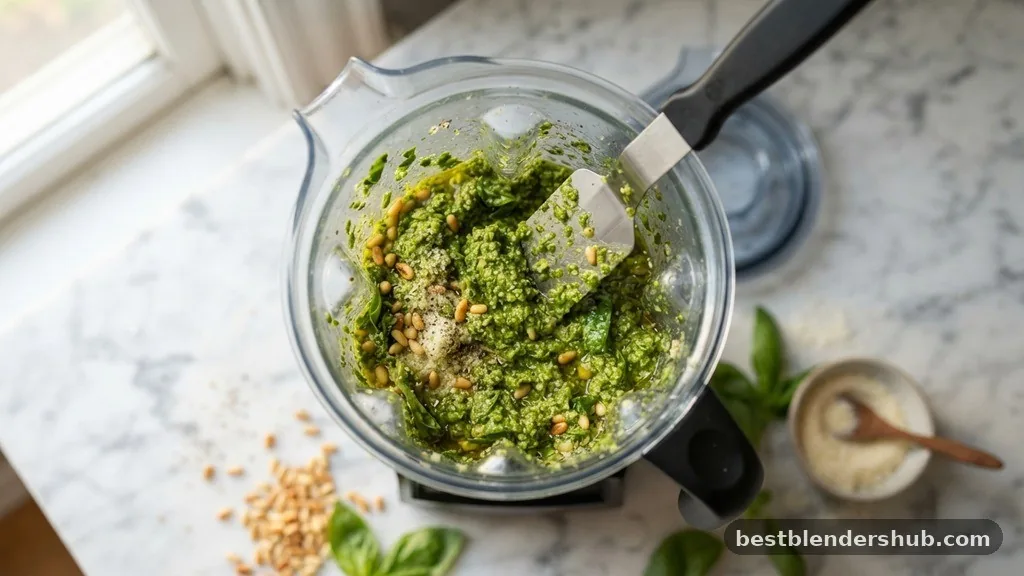
To successfully make pesto in a blender, you must prioritize short bursts of power over continuous running. Blenders are designed to liquify ingredients, whereas a food processor is built to chop them into a textured paste.
Because a blender’s blades spin much faster, they generate heat friction that can cause your basil leaves to wilt and turn dark almost instantly. If you run the motor for too long, you risk oxidation, which strips the sauce of its bright green color and fresh, peppery flavor.
The secret to success lies in using the pulse setting rather than a high-speed constant blend. Start by adding your liquids first, such as the extra virgin olive oil, to help the blades catch the solids. Add your garlic cloves, pine nuts, and parmesan cheese in stages, pulsing just until the ingredients are broken down.
Stopping frequently to scrape down the sides of the jar is essential for consistency. If you force the machine to run continuously, you will likely encounter cavitation, where the blades spin in a pocket of air while the ingredients stay stuck to the walls.
Comparing Kitchen Tools for Pesto Preparation
Choosing the right tool depends on the texture you prefer. While a food processor remains the gold standard for many, a blender is often more accessible for smaller batches.
| Appliance | Best Feature | Texture Result |
|---|---|---|
| Food Processor | Uniform chopping | Coarse and rustic |
| Blender | Speed and emulsification | Smooth and creamy |
| Immersion Blender | Control | Variable |
| Mortar and Pestle | Flavor extraction | Traditional |
Managing Texture Control and Emulsification
You can maintain texture control by keeping your ingredients cold. Many chefs chill their blender jar in the freezer for ten minutes before starting. This minor step helps counteract the heat generated by the motor, keeping the delicate oils in the basil from breaking down prematurely.
When you process the mixture, focus on achieving a proper emulsification. This occurs when the oil and the cheese combine with the herbs to form a stable, creamy sauce.
If your pesto looks too oily or separated, try adding a tablespoon of cold water or a splash of lemon juice. This helps bind the ingredients together. Remember that a blender will naturally create a finer, more uniform sauce compared to the hand-pounded pesto genovese.
If you prefer a crunchier, more rustic bite, keep your pine nuts separate and fold them in by hand after the base is blended. This simple trick provides the contrast that many people find missing in machine-made sauces.
Addressing Common Blender Challenges
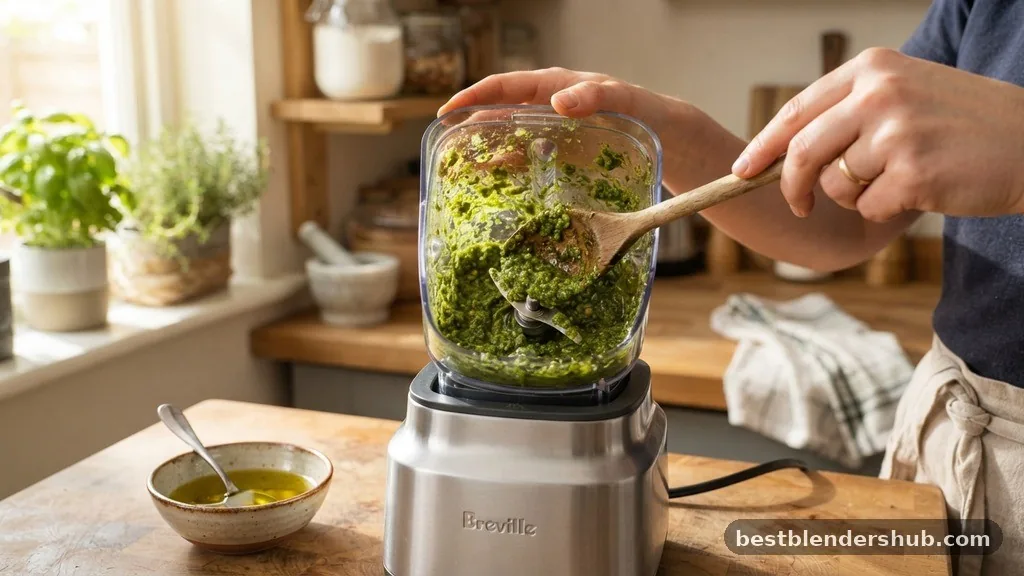
When you ask yourself, “can I make pesto in a blender,” the most common fear is producing a bitter or watery mess. This usually happens because the machine is too efficient at breaking down the cellular structure of the basil.
If you notice your pesto turning brown or bitter, it is a sign that the leaves have been over-processed. To prevent this, always add the cheese and oil toward the end of the process.
Another hurdle is the “stuck” ingredient problem. If you are using a NutriBullet or a similar compact blender, the small jar size can be an advantage for small amounts of pesto. However, these units have very high-speed motors that can heat up ingredients in seconds.
Always keep your finger on the pulse button. If the mixture stops moving, remove the jar and give it a shake, or use a long spatula to push the ingredients toward the blades. Never force the motor if it sounds strained, as this creates excess heat that will ruin the delicate balance of your sauce.
Why Your Pesto Might Not Blend Properly
* The ratio of oil to solids is too low, causing the blades to spin without catching anything.
* The garlic cloves are whole, which makes them difficult for small blades to chop effectively.
* The pine nuts are being added at the very beginning, leading to an overly oily or pasty base.
* The blender jar is too large for the volume of ingredients, preventing the blades from reaching the basil.
* You are trying to blend at a high speed, which whips too much air into the mixture.
Overcoming Typical Topical Gaps
Many enthusiasts struggle with the transition from a traditional recipe to a blender-based one. One common issue is that a blender tends to create a more “pasty” consistency, which can feel heavy when tossed with pasta.
To fix this, reserve a small amount of the cooking water from your pasta and stir it into the pesto right before serving. This creates a glossy, light sauce that clings to the noodles better than a thick, oil-heavy paste.
Another gap in standard advice is the handling of hard cheeses. If your parmesan cheese is in a large block, it might not break down evenly in a blender. Always grate the cheese finely before adding it to the jar.
This ensures that the cheese integrates into the oil and basil instead of leaving large, stubborn chunks at the bottom of the blender. By treating the cheese as a pre-processed ingredient, you save your motor from strain and ensure a more uniform distribution of flavor throughout the batch.
The Importance of Ingredient Quality
Even with the best appliance, the flavor of your pesto depends on the quality of your ingredients. Because a blender processes everything so thoroughly, there is nowhere for low-quality ingredients to hide.
Use the freshest basil leaves you can find, preferably ones that have been washed and dried completely. Water on the leaves will dilute the sauce and prevent the oil from emulsifying properly.
Opt for high-quality extra virgin olive oil to provide a robust base. The flavor of the oil will be amplified by the blending process, so choose one that is fruity and fresh.
When it comes to the nuts, lightly toasting them in a dry pan for a minute or two can significantly boost the depth of the final product. Just be sure to let them cool completely before they touch the blender blades, as warm nuts will release their oils too quickly and make the sauce greasy.
Final Thoughts on Blender Pesto
Making pesto in a blender is a perfectly valid way to enjoy this classic condiment at home. By respecting the speed of the machine and using the pulse function, you avoid the common pitfalls of heat and over-processing. Whether you use a standard countertop blender or a compact personal unit, the goal is to maintain the integrity of the herbs while achieving a creamy, well-emulsified texture.
With a bit of practice and attention to the order of operations, you will find that your homemade sauce rivals anything you could buy in a store. Feel free to experiment with different nuts or greens once you master the basic technique. If you have any favorite variations or tips for your own kitchen setup, I would love to hear how your results turn out.
Frequently Asked Questions
Can you use a blender instead of a food processor for pesto?
Yes, you can use a blender, but you must pulse in short bursts to avoid over-processing the ingredients.
What is the best appliance to make pesto in?
A food processor is generally preferred for its ability to create a coarse, traditional texture without overheating the herbs.
Why won’t my pesto blend in the blender?
You likely have too much air or not enough liquid; add more olive oil and scrape down the sides frequently.
Can you make pesto in a NutriBullet blender?
Yes, but because of the very high speed, use very short pulses to prevent the pesto from becoming bitter.
Does using a blender change the flavor of pesto?
It can if you over-blend, as heat friction from the blades may turn the basil bitter and oxidize it.
How do I stop my pesto from turning brown in a blender?
Pulse in short intervals, chill your blender jar beforehand, and add the oil and cheese only at the end.
Should I blend the pine nuts with the basil?
It is better to pulse them separately or add them halfway through to maintain some texture in the sauce.

Jamesmathew is an expert Amazon affiliate writer, helping readers discover top products, smart deals, and practical buying guides through honest reviews and insightful content.